Best Exercises to Increase Energy After 45 and Improve Vitality
Discover exercises to increase energy after 45 and learn how regular exercise after 45 may support metabolism, circulation, and daily vitality through simple and sustainable movement habits.
HEALTHY HABITS
Written by Emily A. Bennett – Health Research Editor – Based on peer-reviewed research
12/16/20253 min read
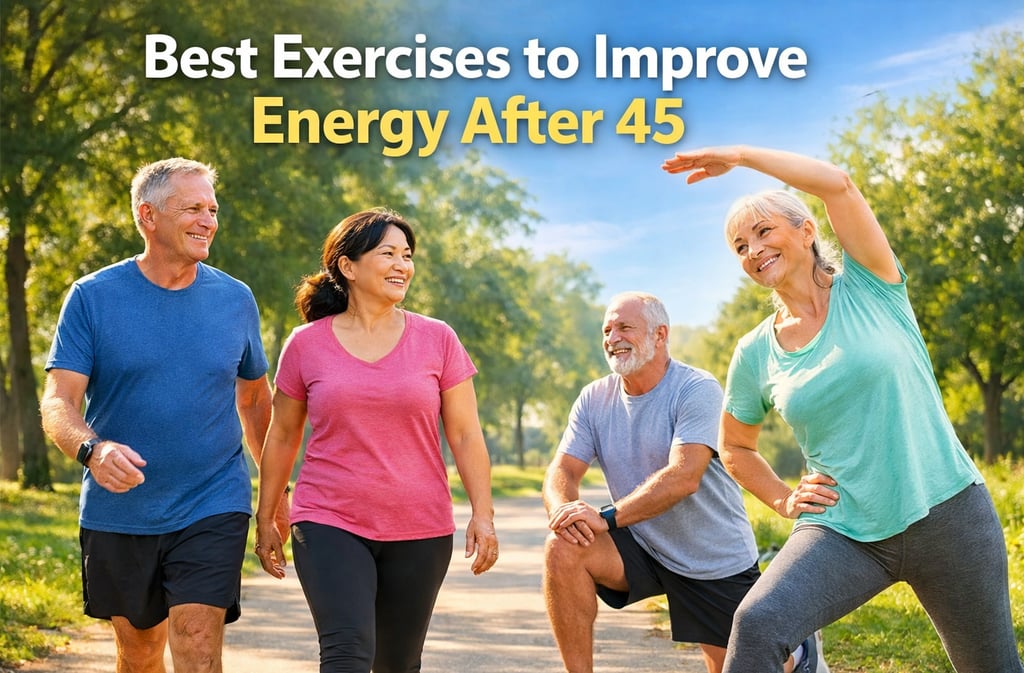
What Are the Best Exercises to Improve Energy After 45?
Many adults begin looking for exercises to increase energy when fatigue starts affecting their daily routine. Although it may seem counterintuitive, the right types of physical activity can actually help improve energy levels. Regular movement supports circulation, metabolism, and sleep quality, all of which influence how energetic we feel. Even simple activities such as walking, stretching, or light strength exercises may help support better vitality over time.
Simple Movements That May Help Increase Vitality.
Physical activity should always be adapted to individual abilities and comfort levels. Respect your personal limits and progress gradually. If needed, consider consulting a qualified professional before starting a new exercise routine.
What You'll Learn
In this article you'll discover:
• exercises that may help support daily energy
• how movement influences circulation and metabolism
• simple ways to include physical activity in your routine
Why exercise can improve energy
It may seem counterintuitive, but physical activity often increases energy levels.
Exercise supports several biological systems involved in vitality, including:
circulation
metabolism
mitochondrial function
sleep quality
stress regulation
Research suggests that regular physical activity can help reduce fatigue and improve energy levels in many adults (Puetz et al., Psychological Bulletin, 2006).
This is why many people searching for how to increase energy after 45 naturally eventually discover that movement is one of the most effective strategies.
The best types of exercise for energy after 45
The goal is not extreme workouts.
Instead, focus on consistent and manageable movement.
Regular movement often helps improve circulation, oxygen delivery and metabolic balance, which may influence how energetic people feel throughout the day.
Walking
Walking is one of the most accessible forms of exercise.
Benefits include:
improved circulation
better metabolism
reduced stress
improved sleep
Even 20–30 minutes per day can help support energy levels.
Walking outdoors may provide additional benefits from sunlight exposure and fresh air.
Outdoor activities may also support natural vitamin D production through sunlight exposure. When sun exposure or dietary intake may be limited, some individuals explore supplemental options such as Nature Made Vitamin D3.
Strength training
Muscle mass tends to decrease gradually with age.
Strength exercises help maintain muscle, which supports metabolism and daily energy.
Simple strength exercises include:
bodyweight squats
light resistance bands
push-ups against a wall
light dumbbells
Maintaining muscle helps support metabolic health and physical stamina.
Stretching and mobility exercises
Mobility exercises help maintain flexibility and reduce stiffness.
Examples include:
gentle stretching
yoga
mobility routines
slow movement exercises
These exercises can improve circulation and help the body feel more energized throughout the day.
Cycling
Cycling is a low-impact activity that is easier on joints than many other exercises.
Benefits include:
cardiovascular health
improved endurance
increased circulation
Even moderate cycling sessions may help support vitality.
Swimming
Swimming provides full-body movement while placing minimal stress on joints.
It is particularly helpful for adults who experience joint discomfort during high-impact activities.
Swimming supports:
cardiovascular health
muscle strength
flexibility
How much exercise is needed?
A common question people ask is:
How much exercise improves energy?
Health guidelines often recommend:
This may include:
walking
cycling
swimming
light strength training
The most important factor is consistency.
Small movements during the day also matter
Not all movement needs to be structured exercise.
Daily activities also contribute to energy levels.
Examples include:
taking short walks
standing and stretching
gardening
household activity
These small movements reduce long periods of inactivity, which may contribute to fatigue.
Exercise and sleep quality
Another reason exercise improves energy is its effect on sleep.
Regular movement may help:
improve sleep quality
regulate circadian rhythms
reduce stress levels
Better sleep often translates to higher daytime energy.
Starting slowly is the best strategy
If someone has not exercised for a long time, starting gradually is often the best approach.
Begin with:
short walks
light stretching
gentle strength exercises
Progress can happen slowly. Always stay within personal limits and consider individual health conditions.
Physical activity works together with nutrition. Certain nutrients such as magnesium, vitamin D and iron participate in muscle function and metabolic processes that influence energy levels.
Final thoughts
Many adults believe exercise will make them more tired.
But in many cases, the opposite is true.
The right type of movement helps support circulation, metabolism, sleep, and mental well-being, all of which influence daily energy.
Simple, consistent activity may help support greater vitality and a more active life after 45.
Related Articles
Continue exploring:
Frequently Asked Questions
What exercise increases energy the most?
Moderate activities such as walking, cycling, and strength training may help support energy by improving circulation and metabolism.
Can exercise reduce fatigue?
Regular physical activity has been associated with reduced fatigue and improved vitality in many studies.
Is walking enough exercise after 50?
Walking can be an excellent form of exercise. When combined with strength and mobility exercises, it may support overall health and energy.
Scientific References
The following studies and scientific reviews helped inform the content of this article.
Puetz TW et al.
Physical Activity and Feelings of Energy and Fatigue.
Psychological Bulletin. 2006.
Warburton DER et al.
Health Benefits of Physical Activity.
CMAJ. 2006.
Medical Disclaimer
Affiliate Disclosure
Editorial Policy
Someone you care about might need to hear this, share it with them.
Want to keep learning?
Subscribe to receive weekly content about strength, independence, well-being, and longevity.
Contact
Send your testimonial or contact us
info@masteractive.life
© 2026. All rights reserved.
About Our Project:
Editorial Policy
Medical Disclaimer
Affiliate Disclosure