Why an Afternoon Energy Crash Happens After 45
Learn why an afternoon energy crash happens after 45 and understand the factors behind afternoon fatigue, including sleep quality, nutrition, hydration, and daily lifestyle habits.
ENERGY & VITALITY
Written by Emily A. Bennett – Health Research Editor – Based on peer-reviewed research
12/23/20254 min read
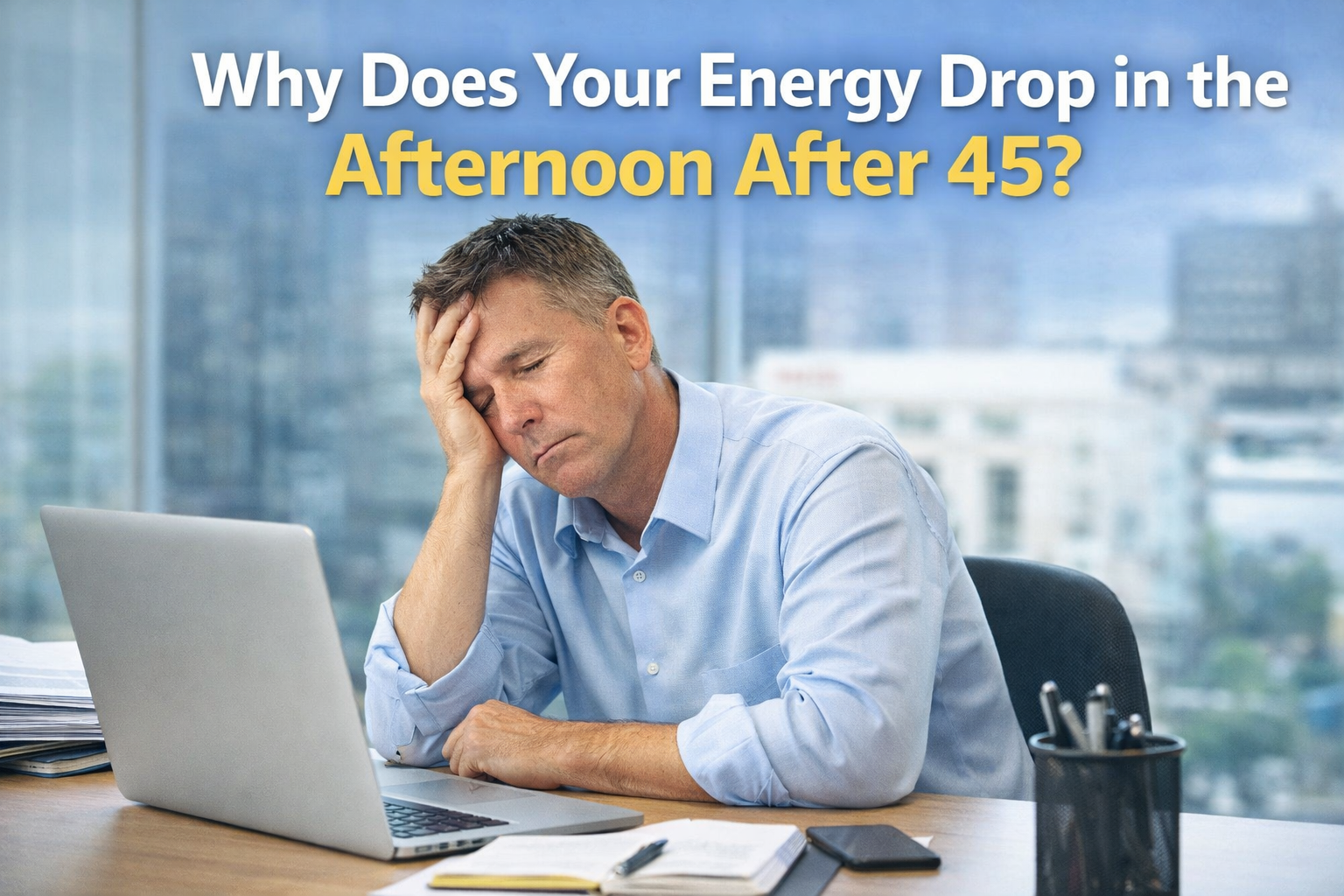
Why Does Your Energy Drop in the Afternoon After 45?
Many people notice an afternoon energy crash after 45, especially between 2 p.m. and 4 p.m. Several factors can influence this drop in energy, including sleep patterns, meal composition, hydration and daily stress levels.. This energy dip is often influenced by factors such as sleep quality, hydration, meal composition, and daily stress levels, all of which can influence how the body regulates energy throughout the day.
What You'll Learn
In this article you'll discover:
• why energy levels often drop in the afternoon
• common lifestyle factors that contribute to fatigue
• practical strategies that may help maintain steady energy throughout the day
Understanding the Mid-Day Energy Crash
Linda is 53.
Most mornings start well. She wakes up, drinks coffee, answers emails, and begins her day with reasonable focus.
But sometime between 2:00 and 4:00 PM, something changes. Her energy fades.
Concentration drops. She feels sluggish. Sometimes she just wants to lie down.
If this sounds familiar, you are not alone.
Many adults begin experiencing a mid-afternoon energy crash after 45, even when their mornings feel productive. Understanding why this happens can help people develop habits that support more stable energy throughout the day.
Why energy often drops in the afternoon
Afternoon fatigue often results from a combination of factors such as meal composition, sleep quality and daily stress rather than a single cause. Several biological factors contribute to afternoon fatigue.
These include:
circadian rhythms
Heavy meals
blood sugar fluctuations
sleep quality
hydration levels
mental workload
stress
Together, these factors influence how the body regulates alertness during the day.
Circadian rhythms naturally dip in the afternoon
Human energy follows a biological rhythm called the circadian cycle.
Research shows that alertness naturally dips in the afternoon, usually between 1 PM and 4 PM.
This drop happens even in well-rested individuals.
However, lifestyle factors can make this dip more noticeable.
Blood sugar fluctuations
Meals that contain large amounts of refined carbohydrates may cause blood sugar to rise quickly and then drop sharply.
This process can lead to symptoms such as:
fatigue
brain fog
lack of motivation
difficulty concentrating
Balanced meals that include protein, fiber and healthy fats may help support more stable energy levels compared to meals based mainly on refined carbohydrates.
Sleep quality plays a major role
Another common reason for afternoon fatigue is poor sleep.
Even small disruptions in sleep quality may reduce the body's ability to maintain stable energy during the day.
Sleep changes are common after midlife and may affect:
recovery
hormone regulation
mental clarity
This is why sleep quality often plays a key role in energy levels after 45. Energy levels during the day are strongly influenced by sleep quality during the previous night.
Dehydration may contribute to fatigue
Hydration is often overlooked.
Even mild dehydration may influence:
concentration
alertness
physical energy
Many people simply forget to drink water consistently during the day.
Mental fatigue accumulates
Long periods of mental focus also contribute to afternoon tiredness.
After several hours of work or concentration, the brain naturally begins to experience cognitive fatigue.
Short breaks may help restore focus and energy.
Habits that may help reduce afternoon fatigue
While afternoon energy dips are normal, certain habits may help support more stable energy.
Eat balanced meals
Meals that combine:
protein
fiber
healthy fats
complex carbohydrates
often support slower digestion and more stable blood sugar levels.
Examples include:
eggs with whole grain toast
grilled chicken salad
salmon with vegetables and quinoa
Take short movement breaks
Light movement can help restore circulation and alertness.
Examples include:
a short walk
stretching
standing and moving around
Even 5–10 minutes of movement may help refresh the body and mind.
Get natural light
Sunlight helps regulate circadian rhythms.
Spending time outdoors earlier in the day may support better alertness later.
Maintain hydration
Keeping water nearby during the day can help maintain hydration levels.
Simple habits such as drinking water with meals may help prevent dehydration-related fatigue.
Consider checking important health markers
In some cases, fatigue may be influenced by underlying factors such as:
vitamin deficiencies
iron levels
hormone changes
metabolic markers
Some individuals choose to review certain health markers through laboratory testing services such as HealthLabs.
Understanding these markers may provide useful insights about overall health.
Always discuss results with a qualified healthcare professional.
Final thoughts
Afternoon energy fluctuations are common and often influenced by lifestyle habits such as sleep, meal composition and daily stress. Understanding how these factors interact can help people build routines that support more consistent energy levels.
Circadian rhythms, nutrition, sleep quality, and daily habits all influence how energy changes during the day.
The good news is that small adjustments, balanced meals, short movement breaks, hydration, and good sleep habits, may help support more stable energy.
Over time, these simple strategies may help reduce the intensity of afternoon energy crashes.
Related Articles
Continue exploring:
Frequently Asked Questions
Why do I feel extremely tired at 3 PM?
A natural dip in circadian rhythms often occurs in the afternoon. Poor sleep, blood sugar changes, and dehydration may make this dip more noticeable.
What helps stop afternoon fatigue?
Balanced meals, hydration, short movement breaks, and adequate sleep may help support more stable daytime energy.
Is afternoon fatigue normal after 50?
Many adults experience some energy drop in the afternoon. However, persistent fatigue may be influenced by sleep, nutrition, or other health factors.
Scientific References
The following studies and scientific reviews helped inform the content of this article.
Monk TH.
Circadian Rhythms in Human Performance.
Chronobiology International. 2005.
Tardy AL et al.
Vitamins and Minerals for Energy, Fatigue and Cognition.
Nutrients. 2020.
Medical Disclaimer
Affiliate Disclosure
Editorial Policy
Someone you care about might need to hear this, share it with them.
Want to keep learning?
Subscribe to receive weekly content about strength, independence, well-being, and longevity.
Contact
Send your testimonial or contact us
info@masteractive.life
© 2026. All rights reserved.
About Our Project:
Editorial Policy
Medical Disclaimer
Affiliate Disclosure